'/%3e%3cpath%20d='M20%200C31.0454%200.000263888%2039.9999%208.95455%2040%2020C39.9999%2030.962%2031.1805%2039.8647%2020.25%2039.999C20.2428%2039.9991%2020.2348%2039.999%2020.2275%2039.999V40C20.2173%2040%2020.2065%2039.9991%2020.1963%2039.999C20.1311%2039.9996%2020.0653%2040%2020%2040V39.9941C18.9137%2039.9663%2017.8401%2039.7415%2016.835%2039.3252C15.76%2038.8799%2014.7828%2038.227%2013.96%2037.4043C13.137%2036.5813%2012.4835%2035.6036%2012.0381%2034.5283C11.5928%2033.4531%2011.3633%2032.3005%2011.3633%2031.1367V21.1904L15%2023.29V31.1367C15%2031.823%2015.1358%2032.5026%2015.3984%2033.1367C15.6611%2033.7708%2016.0459%2034.3477%2016.5312%2034.833C17.0164%2035.3181%2017.5927%2035.7032%2018.2266%2035.9658C18.842%2036.2207%2019.5013%2036.3546%2020.167%2036.3623C20.1795%2036.3622%2020.1925%2036.3625%2020.2051%2036.3623C29.1474%2036.2525%2036.3632%2028.9687%2036.3633%2020C36.3632%2010.9629%2029.0371%203.63698%2020%203.63672C18.3456%203.63673%2016.7505%203.88277%2015.248%204.33789L11.2344%202.01953C11.3217%201.97623%2011.4102%201.93338%2011.499%201.8916C14.081%200.677617%2016.9642%201.31978e-05%2020%200Z'%20fill='url(%23paint1_linear_3622_27254)'/%3e%3ccircle%20cx='13.179'%20cy='17.2727'%20r='2.27273'%20fill='%237F6AA0'/%3e%3cdefs%3e%3clinearGradient%20id='paint0_linear_3622_27254'%20x1='32.2865'%20y1='6.36342'%20x2='-0.0294657'%20y2='36.0851'%20gradientUnits='userSpaceOnUse'%3e%3cstop%20offset='0.163105'%20stop-color='%23D76F70'/%3e%3cstop%20offset='1'%20stop-color='%237F6AA0'/%3e%3c/linearGradient%3e%3clinearGradient%20id='paint1_linear_3622_27254'%20x1='40'%20y1='0'%20x2='9.66985'%20y2='38.7763'%20gradientUnits='userSpaceOnUse'%3e%3cstop%20stop-color='%23DB6F6E'/%3e%3cstop%20offset='1'%20stop-color='%23F7BA29'/%3e%3c/linearGradient%3e%3c/defs%3e%3c/svg%3e)
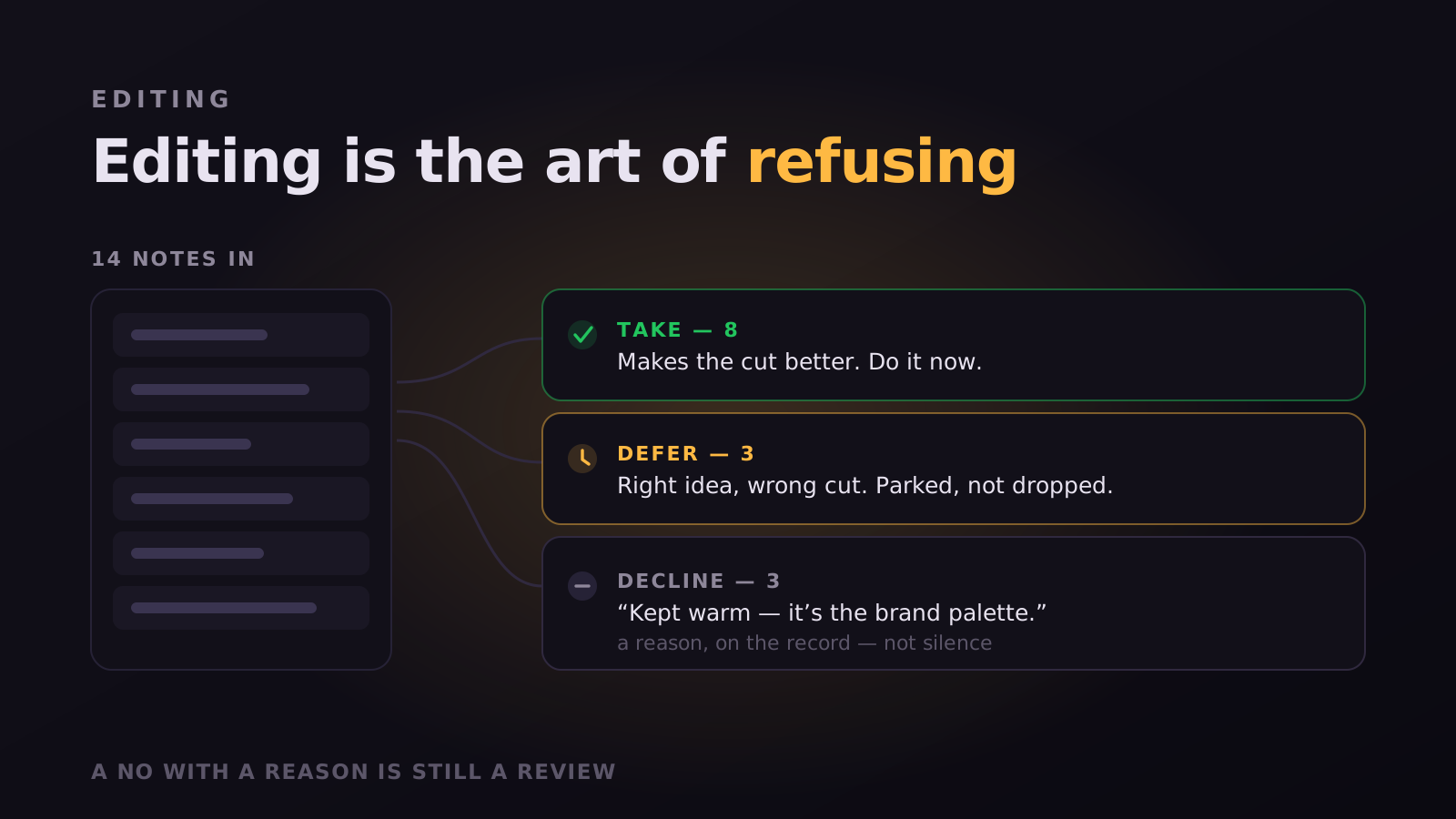
Junior editors address every note. Senior editors address the right notes. The difference isn't skill in After Effects: it's the judgment to know when "make it pop more" is good instinct and when it's the client trying to art-direct away from their own vision.
The three categories of feedback
- Notes that fix a real problem: always address
- Notes that are taste differences: discuss before changing
- Notes that contradict the brief: push back, kindly
Separate the observation from the prescription
Most notes arrive as a solution rather than a symptom. "Cut the intro" is a prescription; the observation underneath it is usually "I got bored before the content started." Those are different problems, and the prescription is often the wrong fix for the real one: the intro may not need cutting so much as a reason to keep watching.
So the useful question is not whether to accept the note. It is what the reviewer noticed. Clients are excellent at detecting that something is wrong and unreliable at diagnosing why, which is the same split every doctor works with and nobody finds insulting.
How to push back without spending credibility
- Acknowledge the observation before disputing the fix: they did notice something real
- Give the reason, once, in a sentence, not a paragraph of justification
- Offer the alternative you would do instead, so it is a choice rather than a refusal
- Say it in writing, attached to the note, where it can be re-read later
The trick is making the pushback structural, not personal. Magpiie's "Won't fix" state lets you mark a comment as intentionally not addressed, with a short note explaining why. The reviewer sees the response, doesn't feel ignored, and you have a paper trail if it ever comes back as "I told you to fix this."
When to just do it
Not every hill is worth it. If the note is cheap to implement, does not damage the work, and the client feels strongly, the right move is usually to make the change and spend your credibility on the one that matters later in the project. Refusing well is a limited resource, and the editors who are best at it are the ones who use it rarely.
""Won't fix" with a sentence of context turned my hardest client conversations into 30-second exchanges."
Make the refusal a state, not a silence
Most pushback fails for a structural reason rather than a diplomatic one. The note lives in an email, your decision lives in your head, and the deliverable shows no trace of either. Three weeks later nobody can distinguish a note you considered and rejected from one you never read, and you end up relitigating it from the weakest possible position.
The fix is to give the refusal somewhere to live. In Magpiie a change can be marked Won't fix, with the reasoning attached to the note itself, pinned to the frame it referred to. It leaves the active list so it stops nagging the editor, and it stays in the history so it stops resurfacing as a fresh idea.
- Open. Raised, nobody has started.
- In progress. Someone owns it right now.
- Needs info. It cannot be actioned as written, so it goes back with a question rather than a guess.
- Resolved. Done and ready to verify.
- Won't fix. A deliberate decision, with the reason recorded next to it.
Needs info deserves more credit than it gets. A large share of the notes you want to refuse are not actually wrong, they are unactionable: "the middle drags" is a real observation with no executable instruction inside it. Pushing that back as a question is not a refusal at all, and it converts a fight about taste into a request for specifics.
If your no lives only in a Slack reply, it will be re-asked. If it lives on the note, attached to the frame, with one sentence of reasoning, it becomes a decision the client can see, disagree with, or accept. The point is not to win the argument. It is to only have it once.
Say no once, in writing, where the note lives
A rejection that travels with the deliverable behaves very differently from one that travels through a conversation. When you publish the next version, the summary groups notes by outcome, so anything marked Won't fix appears alongside everything you did change. The client sees the trade rather than only the refusal, which is most of the reason it lands.
That framing matters more than the wording. "We kept the longer intro" reads as stubbornness on its own. The same sentence sitting under a list of eleven resolved notes reads as judgement, because the evidence that you took the rest seriously is right there.
The four refusals worth practising
Most of the notes you should decline fall into a small number of shapes, and each has a reply that works better than a debate.
- The taste note with no goal attached. Ask what it should achieve, not whether they are sure. "Happy to try a punchier open, what is it competing with?" turns preference into a target you can hit or miss.
- The note that contradicts an earlier approval. Point at the record rather than your memory. A timestamped approval on V2 makes this a two-line reply instead of an argument about what was agreed.
- The note from someone outside the decision chain. Not every comment carries equal weight, and pretending otherwise is how cuts get worse. Internal threads stay separate from client threads precisely so this can be sorted before it reaches the editor.
- The note that is right but out of scope. Mark it Won't fix for this round with a reason, and it stays in the history as something to revisit rather than a fight about the deadline.
What the refusals cost you if you never make them
The reason to take this seriously is that unrefused feedback does not disappear. It becomes a revision round. Say yes to nine notes when four were worth doing and you have bought yourself an extra pass, another export, another day of the client waiting, and a cut that is slightly worse than the one you had.
That is also why the per-round counts matter. Once you can see that a project ran to five rounds and that rounds three through five closed two notes each, the conversation about scope stops being anecdotal. The record is the argument.
"Every note you accept without judgement is a small deposit against the next deadline."
Common questions
Is it not rude to mark a client's note Won't fix? Less rude than silently ignoring it, which is the actual alternative. The state is neutral: it says a decision was made and here is why. Clients object to being unheard far more than to being disagreed with.
What if the client insists? Then they insist, and you do it. The record still helps: when the change lands and does not work, the history shows where the decision came from, and that conversation happens without blame.
Does this work outside video? Yes. The same five states apply to thumbnails, scripts and audio, which matters because the notes most worth refusing are often about a title or a thumbnail rather than the cut itself.
Who gets to say no, and about what
A refusal only holds if it is clear who was entitled to make it. On most projects that is never stated, so every note arrives with the same implied authority and the editor is left arbitrating between a director, a producer and someone from marketing who saw the cut in passing.
Agreeing this before the first review takes about five minutes and saves whole rounds later. Name one person whose approval actually ships the cut. Say plainly that everyone else advises. Keep internal discussion in internal threads so the editor receives a resolved position rather than a live argument, and let the person who owns the call mark the notes that lose.
- Creative calls, pacing, music, grade: the editor proposes, the director decides.
- Brand and legal: not negotiable, and worth catching before the cut rather than in round three.
- Scope: the producer owns it, because scope is a budget question wearing a creative costume.
- Everything else: advisory, and advisory notes are allowed to lose without anyone taking offence.
The formal sign-off matters here too. When a production manager approves a version, that approval is timestamped against that specific cut. It converts "I thought we agreed" into a lookup, which is the least dramatic way a disagreement can end.
Stop reading. Start shipping.
Try Magpiie on your next draft. 30-day free trial on Creator Crew, auto-renews and cancel anytime. Bring your team in five minutes.