'/%3e%3cpath%20d='M20%200C31.0454%200.000263888%2039.9999%208.95455%2040%2020C39.9999%2030.962%2031.1805%2039.8647%2020.25%2039.999C20.2428%2039.9991%2020.2348%2039.999%2020.2275%2039.999V40C20.2173%2040%2020.2065%2039.9991%2020.1963%2039.999C20.1311%2039.9996%2020.0653%2040%2020%2040V39.9941C18.9137%2039.9663%2017.8401%2039.7415%2016.835%2039.3252C15.76%2038.8799%2014.7828%2038.227%2013.96%2037.4043C13.137%2036.5813%2012.4835%2035.6036%2012.0381%2034.5283C11.5928%2033.4531%2011.3633%2032.3005%2011.3633%2031.1367V21.1904L15%2023.29V31.1367C15%2031.823%2015.1358%2032.5026%2015.3984%2033.1367C15.6611%2033.7708%2016.0459%2034.3477%2016.5312%2034.833C17.0164%2035.3181%2017.5927%2035.7032%2018.2266%2035.9658C18.842%2036.2207%2019.5013%2036.3546%2020.167%2036.3623C20.1795%2036.3622%2020.1925%2036.3625%2020.2051%2036.3623C29.1474%2036.2525%2036.3632%2028.9687%2036.3633%2020C36.3632%2010.9629%2029.0371%203.63698%2020%203.63672C18.3456%203.63673%2016.7505%203.88277%2015.248%204.33789L11.2344%202.01953C11.3217%201.97623%2011.4102%201.93338%2011.499%201.8916C14.081%200.677617%2016.9642%201.31978e-05%2020%200Z'%20fill='url(%23paint1_linear_3622_27254)'/%3e%3ccircle%20cx='13.179'%20cy='17.2727'%20r='2.27273'%20fill='%237F6AA0'/%3e%3cdefs%3e%3clinearGradient%20id='paint0_linear_3622_27254'%20x1='32.2865'%20y1='6.36342'%20x2='-0.0294657'%20y2='36.0851'%20gradientUnits='userSpaceOnUse'%3e%3cstop%20offset='0.163105'%20stop-color='%23D76F70'/%3e%3cstop%20offset='1'%20stop-color='%237F6AA0'/%3e%3c/linearGradient%3e%3clinearGradient%20id='paint1_linear_3622_27254'%20x1='40'%20y1='0'%20x2='9.66985'%20y2='38.7763'%20gradientUnits='userSpaceOnUse'%3e%3cstop%20stop-color='%23DB6F6E'/%3e%3cstop%20offset='1'%20stop-color='%23F7BA29'/%3e%3c/linearGradient%3e%3c/defs%3e%3c/svg%3e)
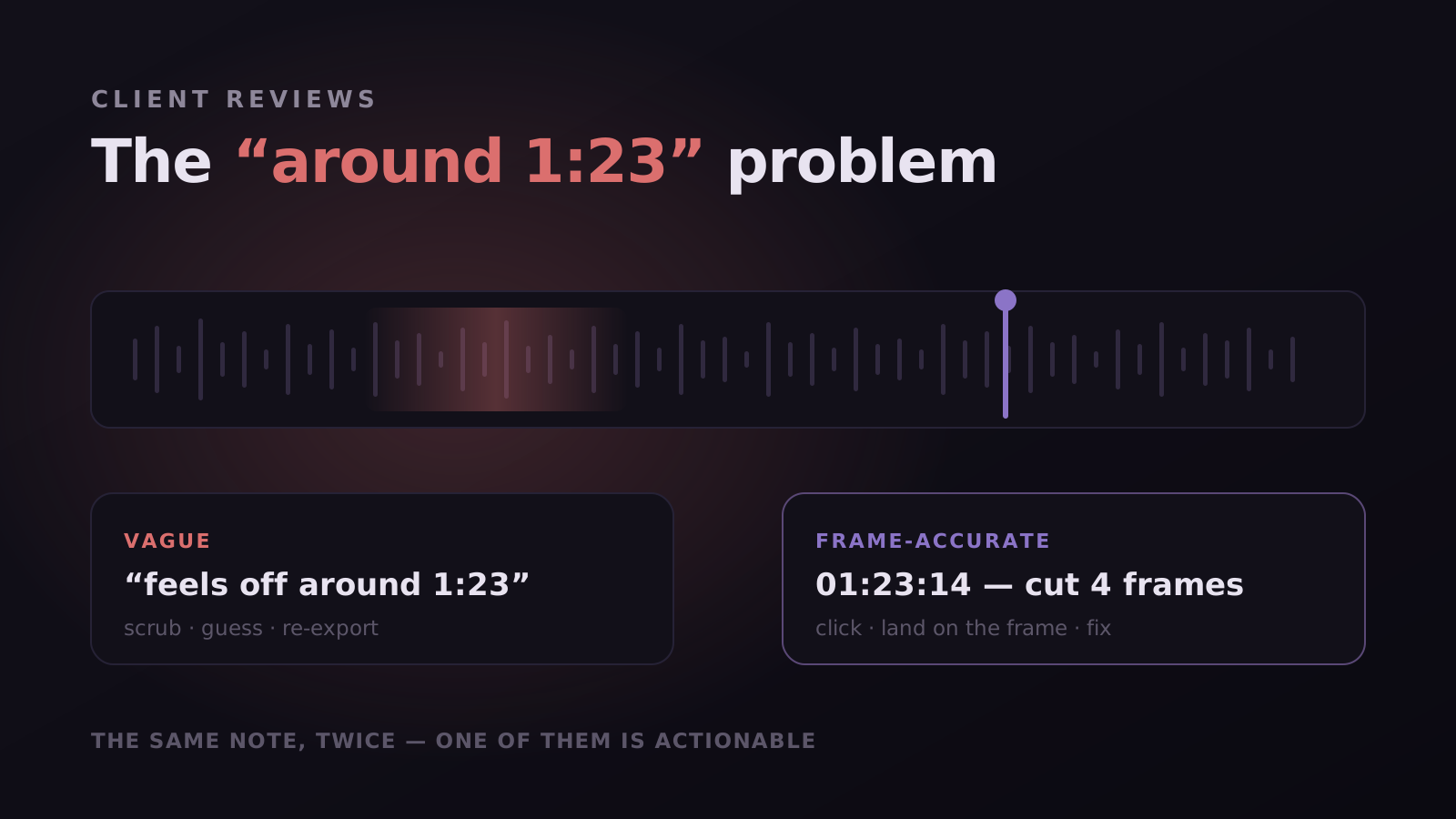
Pull up any editor's Slack and you'll find the same ghost: comments like "the cut feels off around 1:23," "the lower third is weird in the middle section," or, the worst, "can you make it pop more?" Each one is a guessing game that costs real hours.
The problem isn't lazy reviewers. It's that the tools we hand them (Slack, WhatsApp, email, Google Docs) have no idea what a video is. They can't point at a frame. They can't mark a moment. So feedback collapses into prose, and editors translate prose back into timecodes.
What "around 1:23" actually costs
- Editor scrubs to roughly the right spot: 2 to 5 minutes per comment
- Editor guesses the intent, makes a change, exports a new version
- Reviewer says "no, I meant the cut before that one": 24-hour delay
- Repeat across 12 vague notes per draft. That's your week.
Why reviewers write vague notes
It is worth being fair to the reviewer here. Nobody sets out to be unhelpful. A client watching a cut is holding a feeling, something in the second act sags, the intro does not grab, and feelings do not arrive pre-attached to timecodes. Converting "this drags" into "trim 0.8s from the shot at 00:01:23:07" is editorial work, and you are asking a marketing manager to do it in a text box with no video in front of them.
So they approximate. "Around 1:23" is an honest attempt to be helpful with the only tool available: prose. The fix is not to train clients to think like editors. It is to give them a surface where pointing is easier than describing.
The translation tax compounds
A single vague note costs a few minutes. The damage is in how they stack. Twelve ambiguous comments on a draft means twelve separate acts of interpretation, each one a small bet on what the reviewer meant. Get eight right and four wrong, and V2 arrives with four new objections, except now the client is frustrated, because from their side they already explained this.
That is how a two-round project becomes a five-round project. Not through disagreement about the work, but through accumulated translation error. Every round burns an export, a re-watch, and a day of calendar time.
How Magpiie kills the guessing game
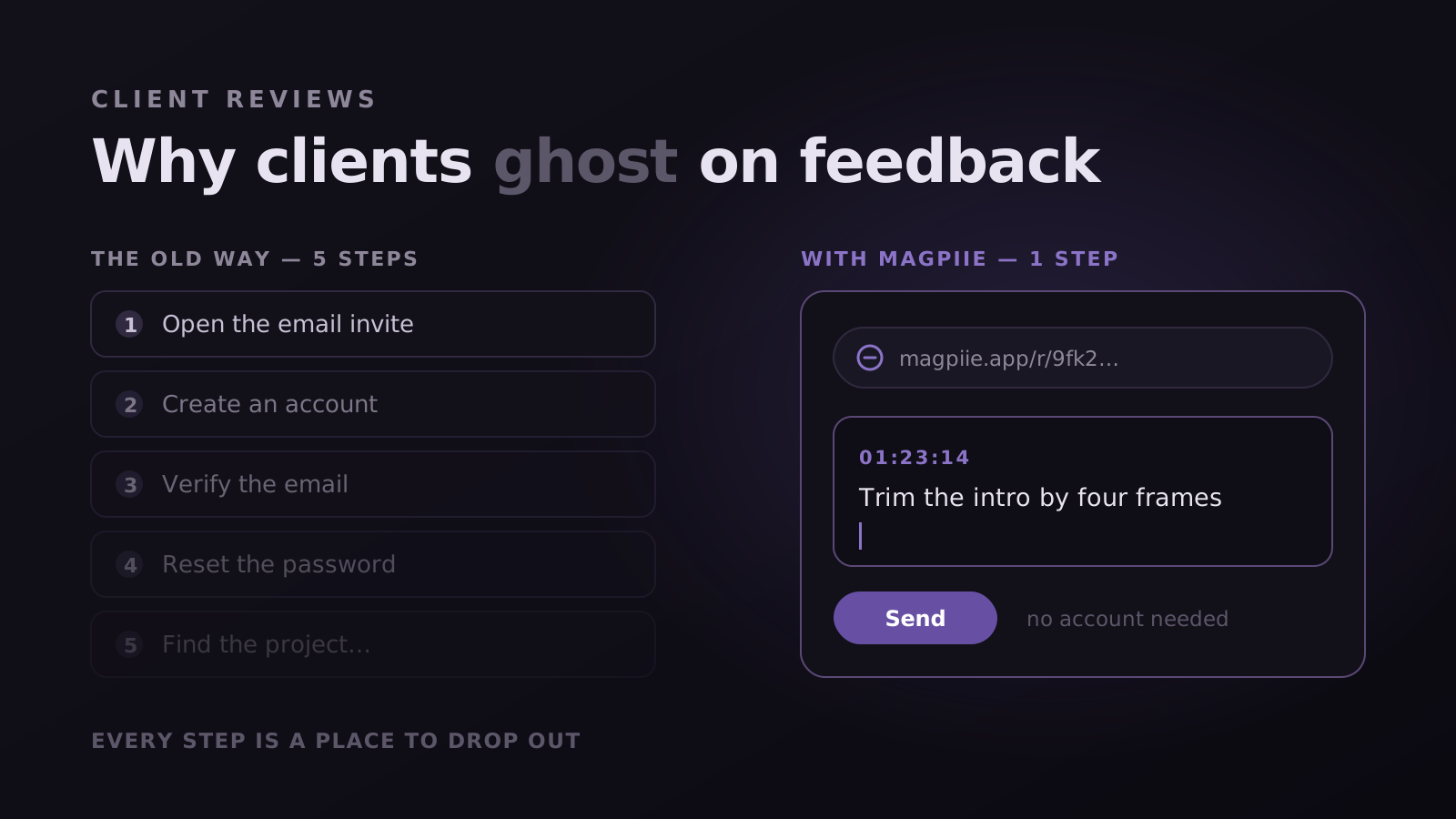
In Magpiie, every comment is locked to a frame. Reviewers click on the player, type their note, and it's pinned to that exact moment: with the timestamp, the visual context, and a screenshot of what they were looking at. The editor opens the comment, the playhead snaps to the frame, and the conversation has nowhere to hide.
The same principle extends past video. A note on a thumbnail pins to a region of the image. A note on a script pins to a line. A note on an audio track pins to a waveform position. In every case the reviewer points instead of describing, and the editor receives an instruction instead of a riddle.
"We cut our average revision cycle from three days to one. The biggest win wasn't the tool: it was that nobody could be vague anymore."
Upload a cut, share the link with your sharpest critic, and watch what happens when "make it pop" is no longer an option. They have to point at the frame.
Anatomy of a precise note
It helps to see what the replacement actually looks like, because "be more specific" is advice nobody can act on. A note that costs an editor nothing to action carries four things, and only the first requires the reviewer to do any work at all.
- A location. Not a description of a moment, but the moment itself: a frame, a script line, a region of a thumbnail, a point in an audio track. The reviewer clicks; the tool records the timecode.
- A category. Visual, audio, text, timing or graphics. This lets an editor batch the work rather than ping-ponging between disciplines in whatever order the notes arrived.
- A priority. Must Fix or Suggestion, so urgency is stated rather than inferred from how forcefully someone phrased it.
- A state. Open by default, then In progress, Needs info, Resolved or Won't fix, so the note has a life rather than just an existence.
Notice how little of that is writing. The reviewer supplies a click and a sentence; the structure comes from the tool. That ratio is the whole design goal, because every unit of effort you ask a client for is a unit of delay you are choosing to accept.
When words fail, let them draw
A category of note exists that no amount of precision training fixes: the reviewer can see the problem and has no vocabulary for it. Lower third sitting slightly wrong, a face too close to the edge, a graphic that collides with a logo. Describing that in prose is genuinely hard even for people who work in video.
Freehand drawing on the frame handles it. Circle the thing, add three words, send. What would have been a paragraph of approximate description becomes unambiguous, and the editor spends zero time reconstructing what was meant. For thumbnails in particular this is often the difference between one round and three.
Converting a feeling into an executable instruction is editorial work. A bare comment box asks a marketing manager to do that work for free, at which point they either approximate it, which costs you a scrub, or skip it, which costs you the note entirely. Neither outcome shows up in any report.
What precision does to the second round
The first-round saving is obvious: no scrubbing, no guessing, no re-export because the wrong shot got trimmed. The second-round saving is larger and less discussed.
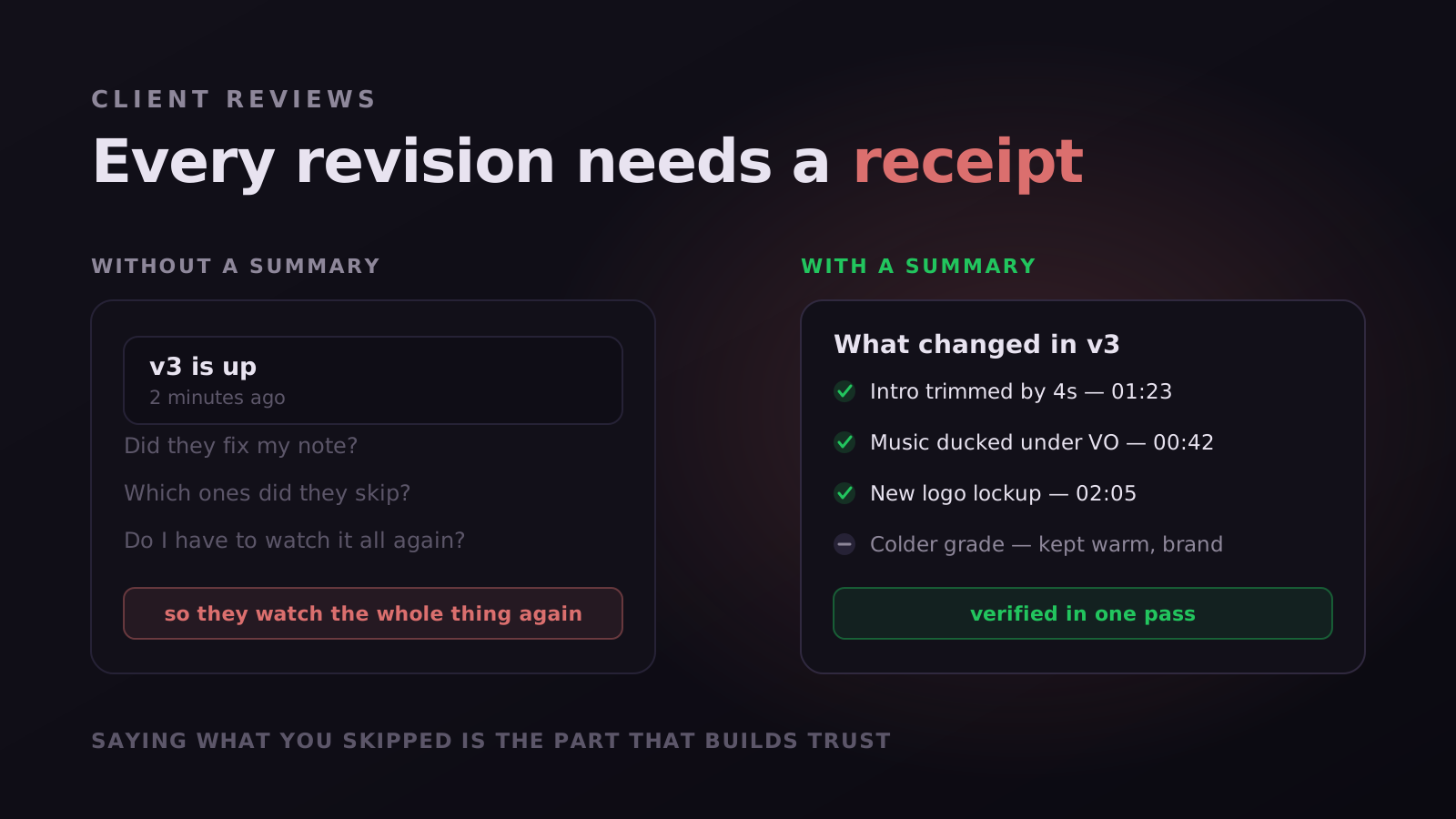
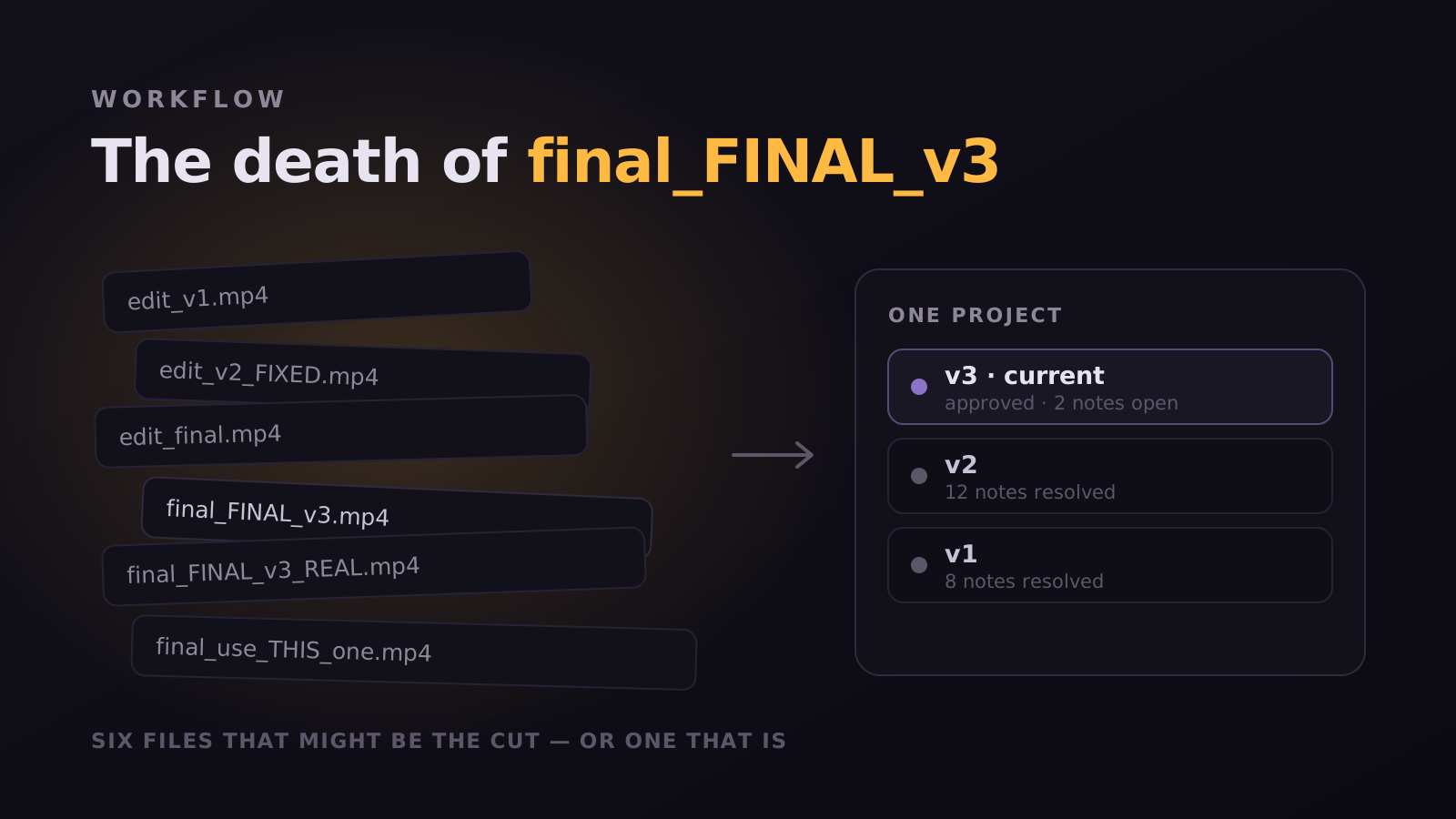
Because every note is anchored to an exact position, the next version can carry them forward mechanically. Upload V4 and Compare ghosts the previous round's markers onto the new cut as dashed outlines, positioned frame-accurately so they never blur into this round's comments. The reviewer walks the list, jumps to each note, confirms or reopens.
That only works because the original note had a position. A vague note cannot be carried forward, because there is nothing to attach it to. So imprecision does not just cost you the first round; it costs you the ability to verify cheaply for the entire life of the project.
Teaching reviewers without training them
Nobody will sit a client down for a tutorial, and you should not try. The behaviour changes through the interface and through two habits on your side.
- Ask for judgement on specific things. "Check 1:12 and the ending" gets a better reply than "thoughts?", because an unbounded request produces an unbounded answer.
- Use Needs info rather than guessing. When a vague note comes back as a question attached to the frame, most people supply the specifics, and the next batch arrives sharper without anyone being lectured.
- Never retype their prose into your own tracker. If the note lives in two places, the two records diverge and the frame-anchored one loses.
- Send the review link, not the file. A downloaded MP4 has no frames to click, and you are back to prose immediately.
The compounding effect is the point. A reviewer who gets one clarifying question about a vague note starts pointing instead of describing, usually within two rounds, and they do it because pointing turned out to be less work than writing the paragraph.
The arithmetic, on one ordinary project
The case for precision is easy to wave away as a small convenience, so it is worth doing the sums on a project nobody would call difficult: one video, three reviewers, two rounds.
- Fourteen notes arrive in round one. Six are precise, eight are approximate.
- Each approximate note costs roughly four minutes of scrubbing and re-reading to locate. That is half an hour before a single edit is made.
- Two of the eight are misread. Both get fixed wrongly, which costs the edit, the export, and a round trip to discover the error.
- Round two arrives with no record of which notes were addressed, so all fourteen get re-watched rather than the four still open.
None of that appears on an invoice or a timesheet as waste. It looks like ordinary editing, which is exactly why it survives. Multiply it across a weekly publishing schedule and the vague note is comfortably the most expensive recurring line item in the process.
The comparison worth making is not precise-versus-vague on a single note. It is the compounding: a precise note is located instantly, carried onto the next version automatically, verified in one click, and closed with a record. A vague one has to be found, guessed at, re-explained, and then found again next round.
"Nobody ever quotes for the twenty minutes spent working out which shot the client meant."
Stop reading. Start shipping.
Try Magpiie on your next draft. 30-day free trial on Creator Crew, auto-renews and cancel anytime. Bring your team in five minutes.