'/%3e%3cpath%20d='M20%200C31.0454%200.000263888%2039.9999%208.95455%2040%2020C39.9999%2030.962%2031.1805%2039.8647%2020.25%2039.999C20.2428%2039.9991%2020.2348%2039.999%2020.2275%2039.999V40C20.2173%2040%2020.2065%2039.9991%2020.1963%2039.999C20.1311%2039.9996%2020.0653%2040%2020%2040V39.9941C18.9137%2039.9663%2017.8401%2039.7415%2016.835%2039.3252C15.76%2038.8799%2014.7828%2038.227%2013.96%2037.4043C13.137%2036.5813%2012.4835%2035.6036%2012.0381%2034.5283C11.5928%2033.4531%2011.3633%2032.3005%2011.3633%2031.1367V21.1904L15%2023.29V31.1367C15%2031.823%2015.1358%2032.5026%2015.3984%2033.1367C15.6611%2033.7708%2016.0459%2034.3477%2016.5312%2034.833C17.0164%2035.3181%2017.5927%2035.7032%2018.2266%2035.9658C18.842%2036.2207%2019.5013%2036.3546%2020.167%2036.3623C20.1795%2036.3622%2020.1925%2036.3625%2020.2051%2036.3623C29.1474%2036.2525%2036.3632%2028.9687%2036.3633%2020C36.3632%2010.9629%2029.0371%203.63698%2020%203.63672C18.3456%203.63673%2016.7505%203.88277%2015.248%204.33789L11.2344%202.01953C11.3217%201.97623%2011.4102%201.93338%2011.499%201.8916C14.081%200.677617%2016.9642%201.31978e-05%2020%200Z'%20fill='url(%23paint1_linear_3622_27254)'/%3e%3ccircle%20cx='13.179'%20cy='17.2727'%20r='2.27273'%20fill='%237F6AA0'/%3e%3cdefs%3e%3clinearGradient%20id='paint0_linear_3622_27254'%20x1='32.2865'%20y1='6.36342'%20x2='-0.0294657'%20y2='36.0851'%20gradientUnits='userSpaceOnUse'%3e%3cstop%20offset='0.163105'%20stop-color='%23D76F70'/%3e%3cstop%20offset='1'%20stop-color='%237F6AA0'/%3e%3c/linearGradient%3e%3clinearGradient%20id='paint1_linear_3622_27254'%20x1='40'%20y1='0'%20x2='9.66985'%20y2='38.7763'%20gradientUnits='userSpaceOnUse'%3e%3cstop%20stop-color='%23DB6F6E'/%3e%3cstop%20offset='1'%20stop-color='%23F7BA29'/%3e%3c/linearGradient%3e%3c/defs%3e%3c/svg%3e)
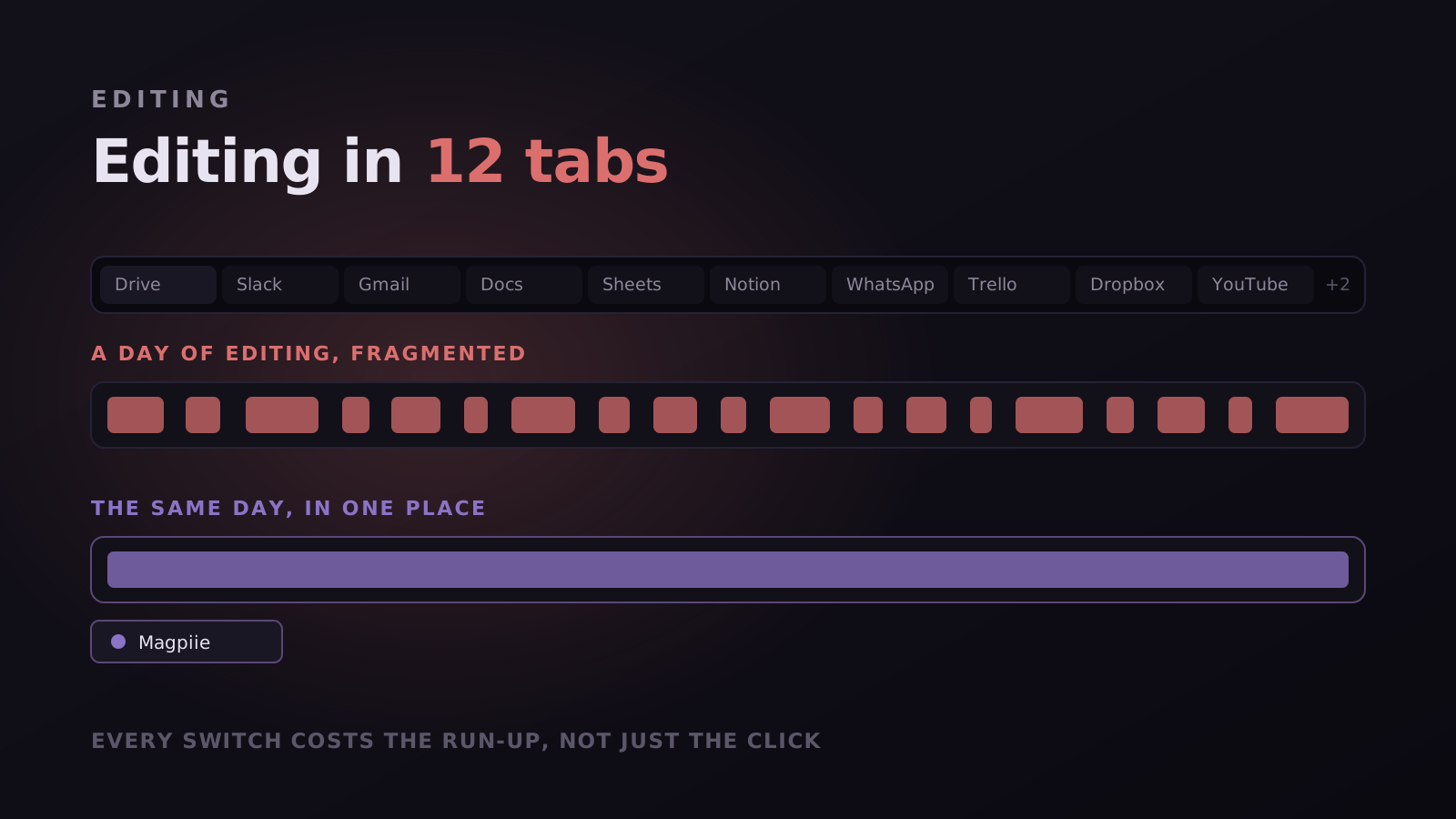
Watch a working editor for an hour and count the tabs. Premiere on one monitor. Slack for client questions. Google Drive for the brand assets. Notion for the brief. Frame.io for the existing review thread. Email for the contract amendment. YouTube for reference clips. A second browser window because the first one ran out of memory.
Every switch between these costs roughly 23 seconds of refocus time, according to research from UC Irvine's Gloria Mark. Multiply that by 200 switches a day and you've lost over an hour. Not to laziness. To the architecture of the workflow.
The tax is bigger than the arithmetic
The 23 seconds is the visible cost. The real damage is what researchers call attention residue: after you switch, part of your attention stays on the previous task. You're back in the timeline, but a fragment of your head is still composing the Slack reply. The work continues at reduced resolution, and you don't notice, because the degradation is invisible from the inside.
This is why editors describe good sessions as "getting into it." Deep editing work needs an uninterrupted runway to build context: the shape of the piece, where the energy sags, which cut you're setting up three minutes from now. That model takes fifteen or twenty minutes to load and one notification to drop.
Where the switches actually come from
Not all context switches are equal. Alt-tabbing to check a reference clip is cheap: same task, same mental model. The expensive ones force a change of role: from editor to account manager to file librarian and back.
- Feedback arrives somewhere other than the cut, so every note is a translation job
- Assets live in a drive organized by someone else's logic, or nobody's
- Status questions ("is V3 approved?") interrupt the person who can least afford it
- Version history lives in filenames, so reconstructing intent means opening three files
The single-pane principle
The point of a unified production tool isn't to be a Swiss Army knife. It's to remove the moments where context lives somewhere else. If the brief, the cut, the comments, the assets, and the approvals all live in one canvas, the editor stops switching and starts editing.
- Brief and reference clips attached to the project, not buried in email
- Comments and version history in the same view as the player
- Approvals visible at a glance: no chasing for a "yes"
- Asset library scoped to the project, not the entire org drive
Batching beats blocking
Consolidating tools removes the involuntary switches. The voluntary ones are on you, and the fix is batching: handle feedback in defined windows rather than as it arrives. Two review passes a day beats twelve interruptions, and clients almost never need the four-minute response time we imagine they do.
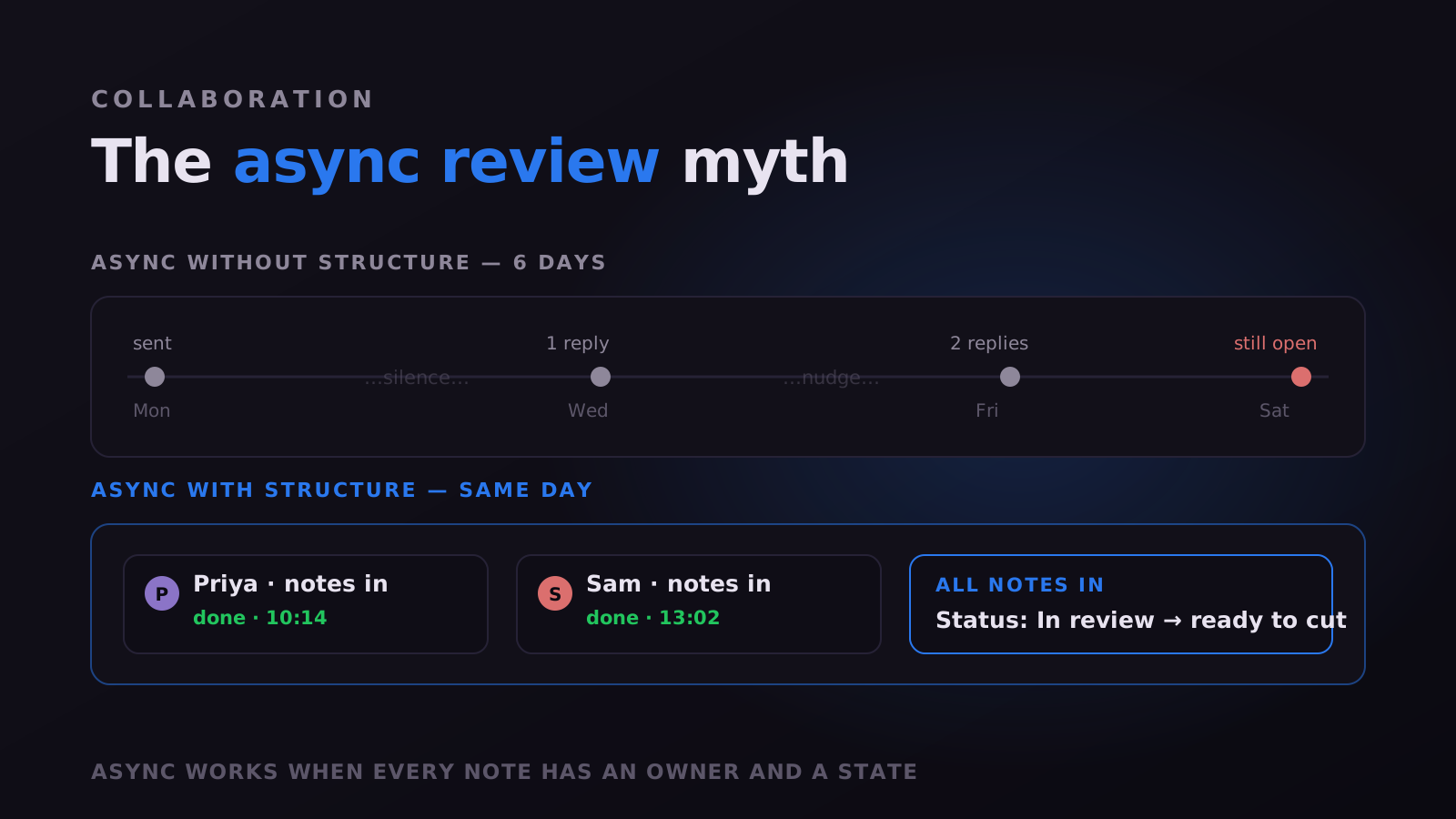
This is the argument for structured, asynchronous review over live calls and rolling Slack threads. Structured feedback can wait in one place until you're ready for it. A message thread demands attention the moment it arrives, which is precisely when you're mid-timeline.
Tomorrow, count your tabs at the start of an edit session. Then count them at the end. The number will horrify you. That's your tax.
The four switches that cost the most
Not all interruptions are equal. A notification you dismiss costs seconds; a switch that forces you to rebuild a mental model costs the rest of the hour. In an edit, four specific switches do most of the damage.
- Timeline to inbox. You leave the cut to find out what a note meant, and return having lost the shape of the sequence you were holding.
- Tool to tool. The video is in one place, the thumbnail in a Drive folder, the script in a doc, the approval in Slack. Each hop carries a login, a search and a reorientation.
- Project to project. Two clients in one afternoon means loading two sets of preferences, two tones, and two sets of unresolved arguments.
- Format to format. Cutting video, then writing a title, then choosing a thumbnail uses different faculties, and switching between them is more expensive than staying in any one of them.
The second one is the most fixable and the least noticed, because it feels like ordinary work rather than interruption. Nobody logs "spent nine minutes finding the approved thumbnail" as a context switch, but that is exactly what it was.
One surface for the whole package
The structural fix is to stop distributing one deliverable across four tools. In Magpiie the video, the shorts cut, the thumbnail, the script and the audio are versions of the same project, reviewed the same way, with the same states and the same history. Approving the package does not mean visiting four places and remembering which ones you have already done.
That collapses the tool-to-tool switch into a tab change, and it removes a specific failure that costs more than the time: shipping a cut that was approved alongside a thumbnail that was not, because the two approvals lived in different systems and nobody was tracking the pair.
Batching, and what makes it possible
The other half of the fix is doing similar work together, and that requires the notes to be sortable by kind. Comments carry a category, visual, audio, text, timing or graphics, and a priority, Must Fix or Suggestion.
- Filter to Must Fix and clear the blockers first, so a readiness call is possible before the suggestions are touched.
- Filter by category and do every audio note in one pass, with the right ears on and the right plugins open.
- Filter by status to see only what you owe, rather than re-reading a thread that is mostly closed.
- Leave suggestions for a single sweep at the end, where they can be judged as a group rather than one at a time.
Working in the order notes arrived is the default in every chat-based workflow, and chronological order is arbitrary order. A list you can slice by kind is the difference between four context switches and one.
Turning the volume down without going dark
The last source of switching is notification pressure, and the usual response is to mute everything, which trades interruption for the worse problem of missed reviews and chasing.
Per-user notification preferences are the middle path. Editors can hear about feedback the moment it lands, because for them that is the work. Everyone else can take a digest instead of live pings. Reminders surface reviews that have gone quiet automatically, so nobody has to hold a mental list of who owes what, which is itself a background tax on attention.
Count the actions between opening a note and executing it: reading it, locating the moment, understanding the priority, making the change. If any of those requires a different application, the tool is generating switches rather than absorbing them.
Designing a week around the switches you cannot remove
Some switching is structural. If you run three clients you will hold three contexts, and no tool changes that. What you can control is how many times a day you pay the reload cost, and the answer for most teams is far fewer than they currently do.
- Give each project a contiguous block rather than a slot in every day. Two half-days on one client beats four two-hour sessions across four days, because you pay the reload twice instead of four times.
- Do review passes as a batch. Sitting down once to walk every open note across projects is cheaper than answering each one as it lands.
- Keep a landing place for stray thoughts. A note pinned to the frame it belongs to costs you five seconds and removes the urge to act on it now.
- Protect the first block of the day for the work that needs the deepest load, which is almost never the work that feels most urgent.
The reason this is worth formalising is that context switching is invisible in every measure teams actually track. Hours logged look identical whether they were four uninterrupted hours or eight fragmented ones. The only thing that differs is how much got finished, and by then the cause is weeks behind you.
The version history helps more than expected here, precisely because it is a record you did not have to keep. Coming back to a project after three days, the notes, the states and the release notes reconstruct where you were far faster than memory does. Reload cost is largely the cost of rebuilding context that was never written down.
Stop reading. Start shipping.
Try Magpiie on your next draft. 30-day free trial on Creator Crew, auto-renews and cancel anytime. Bring your team in five minutes.