'/%3e%3cpath%20d='M20%200C31.0454%200.000263888%2039.9999%208.95455%2040%2020C39.9999%2030.962%2031.1805%2039.8647%2020.25%2039.999C20.2428%2039.9991%2020.2348%2039.999%2020.2275%2039.999V40C20.2173%2040%2020.2065%2039.9991%2020.1963%2039.999C20.1311%2039.9996%2020.0653%2040%2020%2040V39.9941C18.9137%2039.9663%2017.8401%2039.7415%2016.835%2039.3252C15.76%2038.8799%2014.7828%2038.227%2013.96%2037.4043C13.137%2036.5813%2012.4835%2035.6036%2012.0381%2034.5283C11.5928%2033.4531%2011.3633%2032.3005%2011.3633%2031.1367V21.1904L15%2023.29V31.1367C15%2031.823%2015.1358%2032.5026%2015.3984%2033.1367C15.6611%2033.7708%2016.0459%2034.3477%2016.5312%2034.833C17.0164%2035.3181%2017.5927%2035.7032%2018.2266%2035.9658C18.842%2036.2207%2019.5013%2036.3546%2020.167%2036.3623C20.1795%2036.3622%2020.1925%2036.3625%2020.2051%2036.3623C29.1474%2036.2525%2036.3632%2028.9687%2036.3633%2020C36.3632%2010.9629%2029.0371%203.63698%2020%203.63672C18.3456%203.63673%2016.7505%203.88277%2015.248%204.33789L11.2344%202.01953C11.3217%201.97623%2011.4102%201.93338%2011.499%201.8916C14.081%200.677617%2016.9642%201.31978e-05%2020%200Z'%20fill='url(%23paint1_linear_3622_27254)'/%3e%3ccircle%20cx='13.179'%20cy='17.2727'%20r='2.27273'%20fill='%237F6AA0'/%3e%3cdefs%3e%3clinearGradient%20id='paint0_linear_3622_27254'%20x1='32.2865'%20y1='6.36342'%20x2='-0.0294657'%20y2='36.0851'%20gradientUnits='userSpaceOnUse'%3e%3cstop%20offset='0.163105'%20stop-color='%23D76F70'/%3e%3cstop%20offset='1'%20stop-color='%237F6AA0'/%3e%3c/linearGradient%3e%3clinearGradient%20id='paint1_linear_3622_27254'%20x1='40'%20y1='0'%20x2='9.66985'%20y2='38.7763'%20gradientUnits='userSpaceOnUse'%3e%3cstop%20stop-color='%23DB6F6E'/%3e%3cstop%20offset='1'%20stop-color='%23F7BA29'/%3e%3c/linearGradient%3e%3c/defs%3e%3c/svg%3e)
Frame.io is a great tool. It's also a tool built for ad agencies with brand managers, legal review queues, and 30-person creative teams. If that's you, use Frame.io. If you're a YouTuber with a freelance editor and a part-time thumbnail designer, it's like buying a freight truck to deliver groceries.
This isn't a teardown. Frame.io solved a real problem for a real market, and it solved it well enough that Adobe paid $1.275 billion for it. The question isn't whether it's good software. The question is whether the shape of that software matches the shape of your team, and for most creators, it doesn't.
What "heavy" actually means
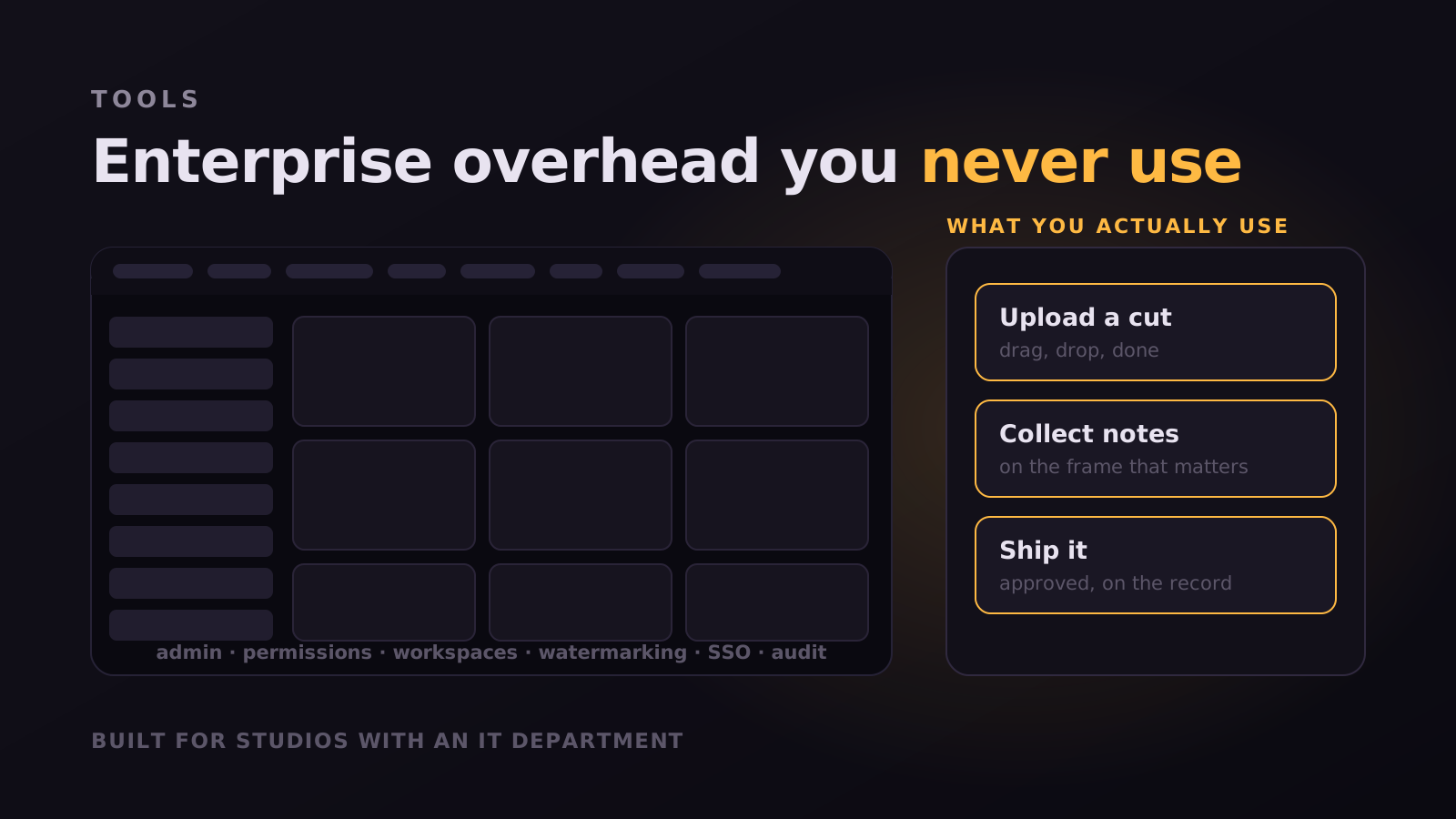
Heavy isn't about load times or feature count. It's about how much organizational structure a tool assumes you already have. Enterprise tools are designed around roles: someone administers the workspace, someone manages permissions, someone onboards the client. When your team is three people and a Discord server, those roles are all you, at 11pm, between edits.
- Reviewers need an Adobe account to comment seriously: friction that kills client speed
- Pricing tiers built around seats and storage that solo creators never approach
- Workspace permissions designed for IT-managed orgs, not 3-person teams
- A learning curve that assumes you have a producer to onboard people
- Project structures that expect a naming convention someone enforces
The client friction problem
Here is where it actually costs you money. Your client is a marketing manager who checks email twice a day and has never heard of Frame.io. You send a review link. They hit a signup wall, or they get in but can't figure out how to leave a timestamped comment, so they do what every client does under friction: they reply to your email with a paragraph of vague notes.
Now you're back to interpreting "can we make the intro punchier?", and the tool you're paying for did nothing to prevent it. The review platform only works if the least technical person in the chain can use it without being taught. That person is never the editor. It's always the client.
What you're actually paying for
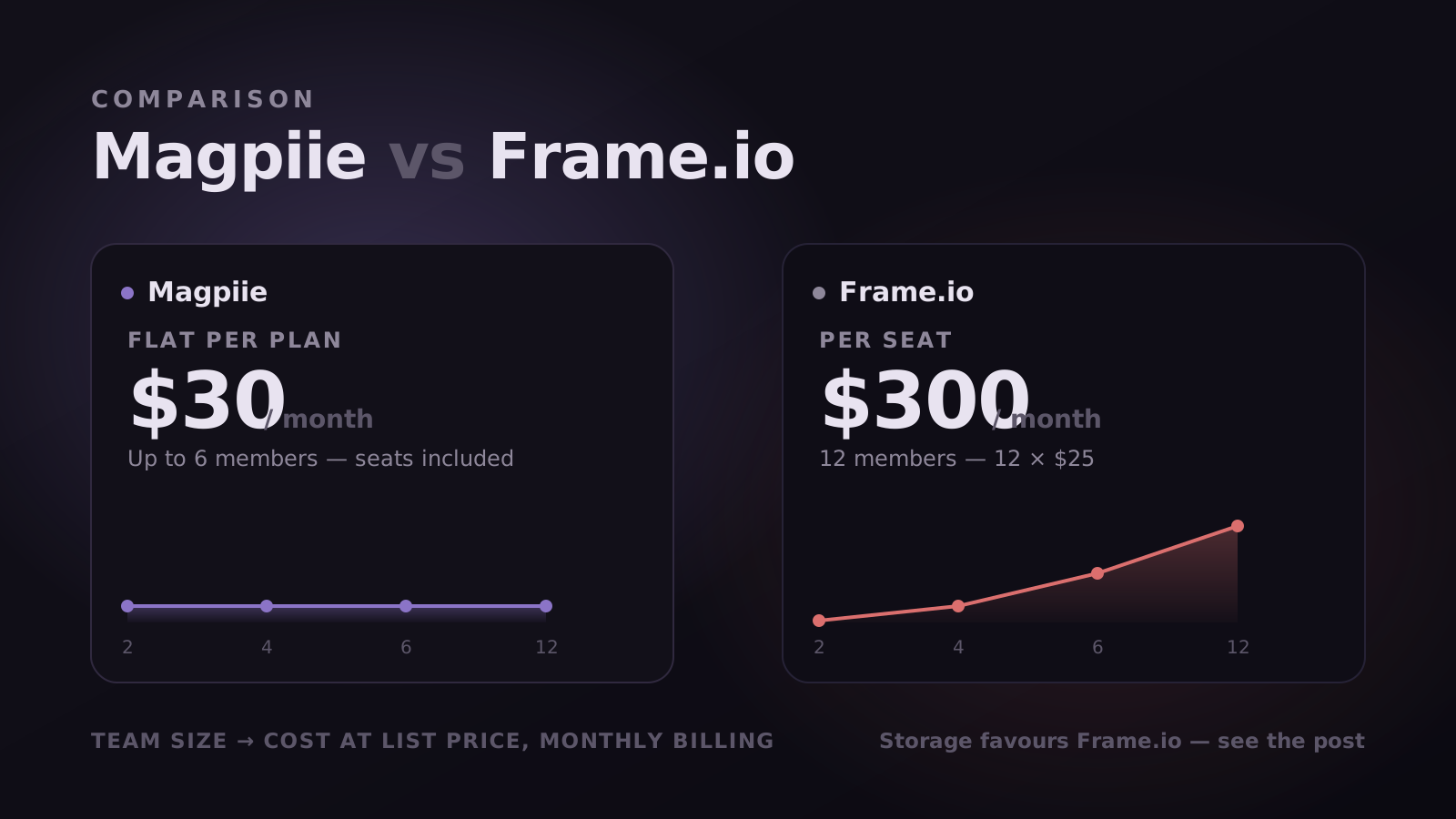
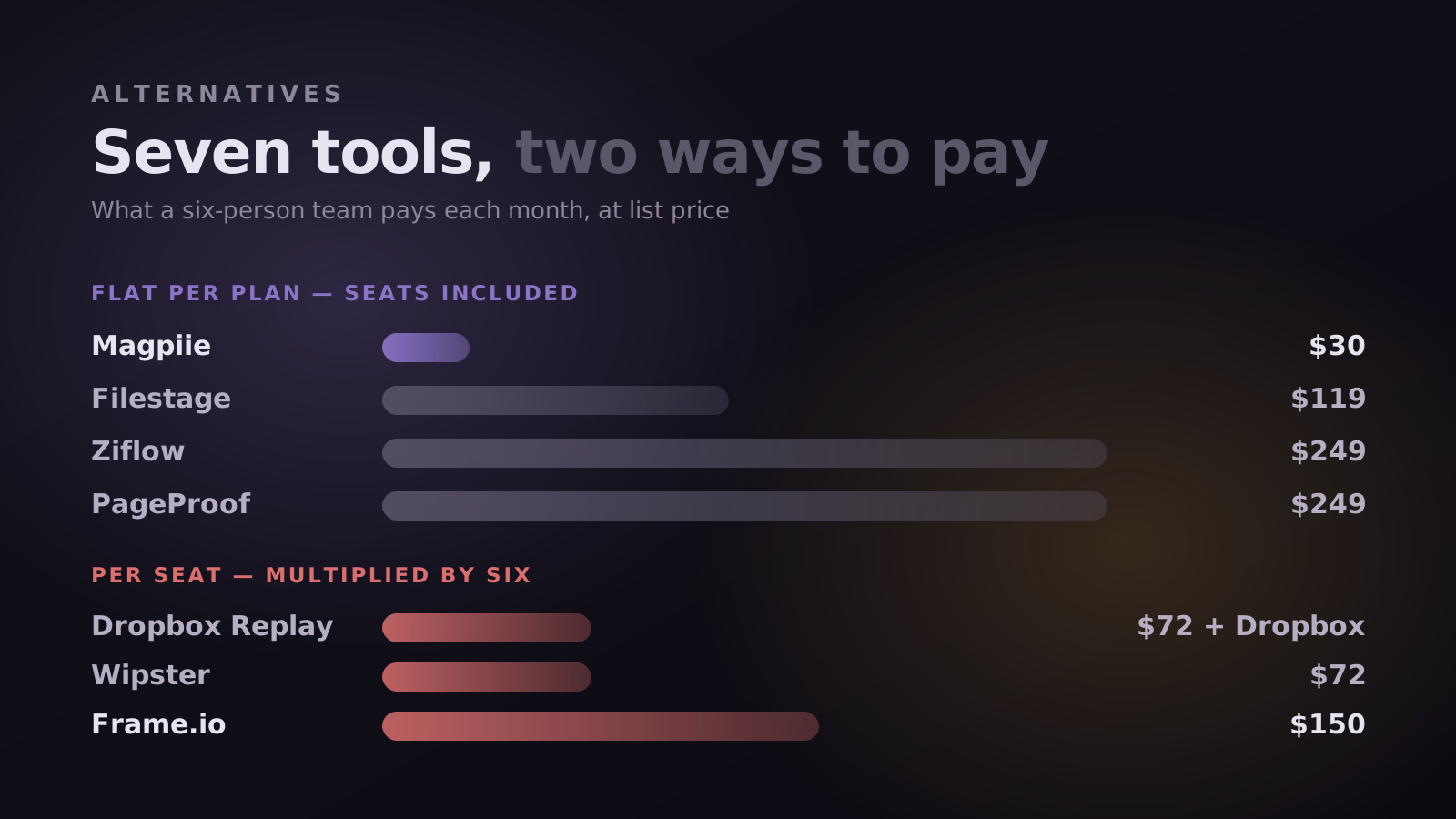
Enterprise pricing is built around seats and storage because enterprises have predictable headcount and centralized budgets. A solo creator has neither. You add a freelance colourist for one project and a seat appears on next month's invoice. You archive a finished campaign and the storage still counts. The pricing model assumes growth in a direction your business doesn't grow in.
"I tried Frame.io and felt dumb for a week. I tried Magpiie and was reviewing my editor's cut in three minutes."
Building from the other end
Magpiie was built from the opposite direction. Solo creators first, teams second, enterprises third. Reviewers don't need an account. The interface explains itself in 30 seconds. Pricing scales with what you actually use, not theoretical seats. The trade-off is real: we don't have every enterprise compliance integration on day one. We will. But we won't bolt them on at the cost of speed.
That ordering matters more than it sounds. When you design for the enterprise first, every later simplification is a compromise against an existing architecture. When you design for the solo creator first, adding structure for larger teams is additive: the simple path stays simple.
When Frame.io is the right answer
To be fair about it: if you need Camera to Cloud ingest from a professional set, if your legal team requires a documented compliance posture, or if you're running colour-critical review with calibrated displays across a distributed post house, Frame.io earns its price. Those are real requirements and a lightweight tool shouldn't pretend to meet them.
Send your next cut to your least technical client and time how long it takes them to leave one useful, timestamped comment. If it's over two minutes, the tool is costing you revision rounds: whatever it costs per seat.
Heavy is a fit problem, not a quality problem
It is worth separating two complaints that get muddled together. One is that a product is badly built. The other is that it was built for a job you do not have. Frame.io is emphatically not the first, and almost every team that describes it as heavy means the second.
It was designed around a film set: a crew, a camera, an Adobe timeline, terabytes of footage, and a pipeline that begins before anyone has cut anything. Every part of that shape is load-bearing for the teams it was built for. Camera to Cloud is genuinely remarkable if your bottleneck is the shoot. It is dead weight if your bottleneck is a client who has not replied since Tuesday.
- Media management exists because a facility archives originals and masters. A creator publishing weekly has nothing to archive.
- Storage tiers exist because footage volume is the constraint. For a small team, work in flight is a few hundred gigabytes and the tiering is a bill rather than a feature.
- Adobe integration exists because the editors are in Premiere all day. It is worth a lot there, and nothing at all if your team is on Resolve, Final Cut or CapCut.
- Enterprise controls exist because deliverables are under embargo. Forensic watermarking is a requirement or it is a settings page you never open.
None of that is criticism. It is the ordinary cost of a product being good at something specific. The mistake is buying the shape without having the job.
The weight you feel is mostly at the edges
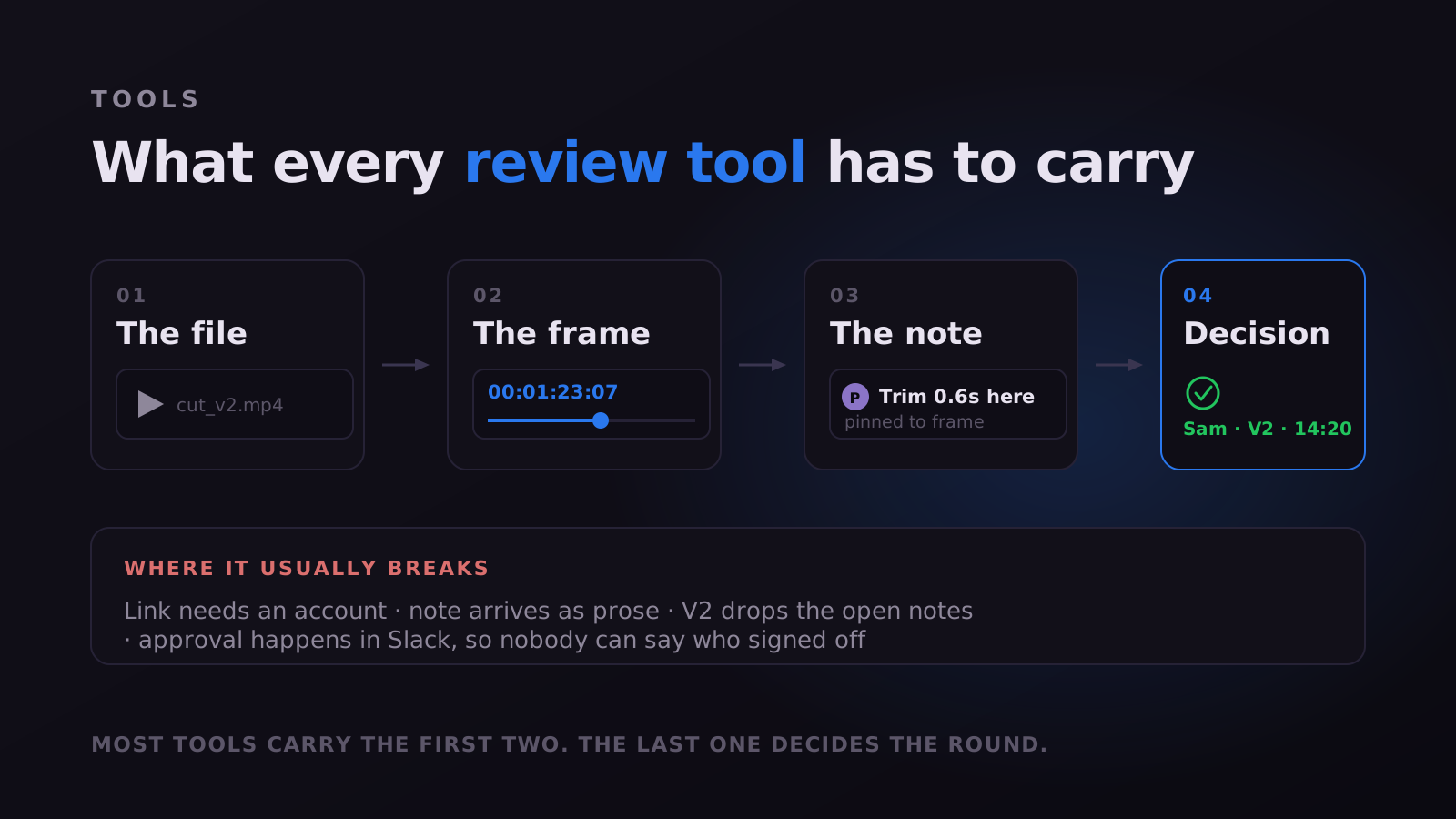
Here is the counterintuitive part. The heaviness rarely shows up where you would expect, in the player or the commenting, which are fine. It shows up at the two edges of the process: getting someone in, and getting a decision out.
Getting in is the account question. Viewing via a link is easy enough, but fuller collaboration leans on an Adobe account, and for an external client that is a wall arriving at exactly the wrong moment. The cost never appears in any report, because a reviewer who defers does not tell you they deferred.
Getting out is the decision question. Comments and versions are well handled; the part that tends to end up in Slack anyway is the moment someone says yes. When approval lives outside the tool, three weeks later nobody can say who signed off or on which cut, and that gap is felt as friction even though no single feature is missing.
What a lighter tool has to get right instead
Being lighter is easy. Being lighter and still sufficient is the hard part, and it means being unusually good at the narrow set of things a review round actually consists of.
- Entry with no account for the person whose reply you are waiting on, because that single step causes more delay than any other.
- Precision at the moment of writing: a note pinned to a frame, with a category and a Must Fix or Suggestion priority, so nothing needs translating afterwards.
- A state model that includes Needs info and Won't fix, so ambiguity and disagreement both have somewhere to live besides your inbox.
- Verification rather than re-review: prior notes carried onto the new cut so the second round is a walk down a list.
- An explicit ending, with a readiness indicator and an approval recorded against a specific version.
Notice that none of those are about storage, transfer or capture. That is the trade being made: give up the pipeline, and spend the whole budget on the round trip between a cut and a decision.
Ask which end of your process is actually slow. If it is capture, ingest or archive, buy for that and accept the weight, because nothing lighter will help. If it is the days between sending a cut and hearing back, the pipeline features are not the thing you are struggling with, and you are paying for them anyway.
Running both, which is what most teams actually do
The framing of this as a switch is usually wrong. Plenty of teams keep Frame.io for the part it is unmatched at and run review rounds somewhere lighter, and that arrangement is more stable than either tool alone.
- The shoot and the ingest stay where the capture pipeline lives, because nothing else does Camera to Cloud.
- Archive and masters stay with the storage that was sized for them.
- Client rounds move to the tool the client can open without an account, because that is the step where days are lost.
- Approvals move with the rounds, so the record of who signed off sits next to the cut they signed off on.
The obvious objection is that two tools means two places to look. In practice the split is clean, because it falls along a real seam: everything before the cut exists, and everything after. The teams that struggle are the ones who split by file type or by client instead, which puts the same project in two systems.
If you do consolidate later, do it at renewal rather than mid-cycle, and start with a project that begins fresh rather than moving anything in flight. Comment threads do not transfer between these products, and closed feedback on delivered work is rarely reopened, so leave finished projects where they are.
Where does your time actually go? If the answer is moving and managing footage, the weight you are complaining about is the product working as designed, and lighter tools will not help. If the answer is waiting for people to look at things and tell you what they think, you are paying for a pipeline to solve a communication problem.
Stop reading. Start shipping.
Try Magpiie on your next draft. 30-day free trial on Creator Crew, auto-renews and cancel anytime. Bring your team in five minutes.