'/%3e%3cpath%20d='M20%200C31.0454%200.000263888%2039.9999%208.95455%2040%2020C39.9999%2030.962%2031.1805%2039.8647%2020.25%2039.999C20.2428%2039.9991%2020.2348%2039.999%2020.2275%2039.999V40C20.2173%2040%2020.2065%2039.9991%2020.1963%2039.999C20.1311%2039.9996%2020.0653%2040%2020%2040V39.9941C18.9137%2039.9663%2017.8401%2039.7415%2016.835%2039.3252C15.76%2038.8799%2014.7828%2038.227%2013.96%2037.4043C13.137%2036.5813%2012.4835%2035.6036%2012.0381%2034.5283C11.5928%2033.4531%2011.3633%2032.3005%2011.3633%2031.1367V21.1904L15%2023.29V31.1367C15%2031.823%2015.1358%2032.5026%2015.3984%2033.1367C15.6611%2033.7708%2016.0459%2034.3477%2016.5312%2034.833C17.0164%2035.3181%2017.5927%2035.7032%2018.2266%2035.9658C18.842%2036.2207%2019.5013%2036.3546%2020.167%2036.3623C20.1795%2036.3622%2020.1925%2036.3625%2020.2051%2036.3623C29.1474%2036.2525%2036.3632%2028.9687%2036.3633%2020C36.3632%2010.9629%2029.0371%203.63698%2020%203.63672C18.3456%203.63673%2016.7505%203.88277%2015.248%204.33789L11.2344%202.01953C11.3217%201.97623%2011.4102%201.93338%2011.499%201.8916C14.081%200.677617%2016.9642%201.31978e-05%2020%200Z'%20fill='url(%23paint1_linear_3622_27254)'/%3e%3ccircle%20cx='13.179'%20cy='17.2727'%20r='2.27273'%20fill='%237F6AA0'/%3e%3cdefs%3e%3clinearGradient%20id='paint0_linear_3622_27254'%20x1='32.2865'%20y1='6.36342'%20x2='-0.0294657'%20y2='36.0851'%20gradientUnits='userSpaceOnUse'%3e%3cstop%20offset='0.163105'%20stop-color='%23D76F70'/%3e%3cstop%20offset='1'%20stop-color='%237F6AA0'/%3e%3c/linearGradient%3e%3clinearGradient%20id='paint1_linear_3622_27254'%20x1='40'%20y1='0'%20x2='9.66985'%20y2='38.7763'%20gradientUnits='userSpaceOnUse'%3e%3cstop%20stop-color='%23DB6F6E'/%3e%3cstop%20offset='1'%20stop-color='%23F7BA29'/%3e%3c/linearGradient%3e%3c/defs%3e%3c/svg%3e)
A production pipeline is a relay race. The writer hands the script to the editor. The editor hands the rough cut to the colorist. The colorist hands the graded cut to the sound designer. The sound designer hands the final to the client. Every handoff is a baton drop waiting to happen.
Where context dies
When the editor passes the cut to the colorist, half of what they "knew", the client wants warmer skin tones, the second act needs more energy, the green in shot 14 is intentional, lives in their head, not the file. The colorist starts from scratch and rediscovers the same notes through trial and error. Multiply that across every handoff and you've added days of rework.
The losses are asymmetric, too. What survives a handoff is whatever was written down: the deliverable spec, the deadline, the file path. What evaporates is the reasoning: why a shot is held two beats longer than it should be, which choices are deliberate and which are unfinished.
The undocumented-intent problem
This is why the second specialist so often "fixes" something that was not broken. The colorist neutralises a green cast that was a deliberate look. The sound designer smooths a jarring cut that was meant to jar. Both did competent work against the information they had, which did not include intent.
- Deliberate choices read as mistakes, and get corrected
- The correction is spotted at client review, one stage too late
- Fixing it means re-opening a stage everyone considered closed
- Nobody is at fault, which makes it awkward to raise and easy to repeat
Magpiie carries context across roles. The colorist opens the project and sees the editor's notes, the client's reference images, and the unresolved comments from the rough cut. They start the grade with the same context the editor finished with. The handoff is a continuation, not a reset.
- Project briefs and references travel with the cut, not with the person
- Role-specific views: colorists see grade notes, editors see edit notes
- Comment history persists across versions, even when the team changes
- Approvals at each stage create a clear paper trail
Handoffs are also where freelancers get blamed
On distributed teams the person receiving the baton is often a contractor who was not in any of the earlier conversations. They are judged on work they did without the context that made it judgeable. Carrying decisions with the project, rather than with the people, is what makes a freelance colorist as informed as a staff one on day one.
"The first time I did a colorist handoff in Magpiie, she opened the project and said "oh, I know exactly what to do." I almost cried."
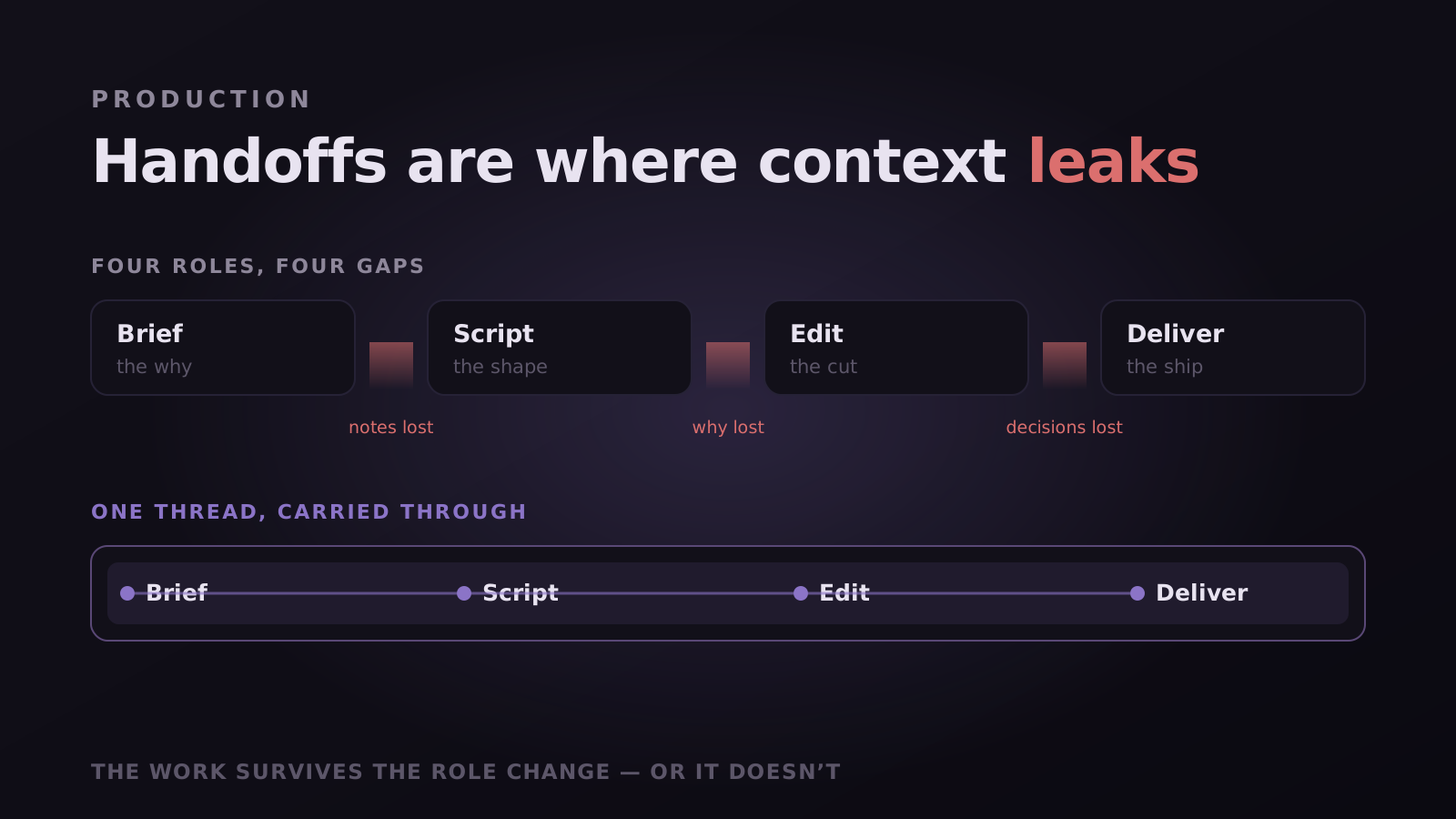
The four handoffs and what leaks at each
Handoff loss is not uniform. Each transition drops a specific kind of context, and knowing which one lets you fix the actual gap rather than adding a meeting.
- Brief to script. What gets lost is the why. The script survives; the reason a particular angle was chosen does not, so the first cut solves the wrong problem convincingly.
- Script to edit. What gets lost is intent per beat. The editor knows what the line says, not what it is meant to do, which is why "this section drags" so often means "this section has no job".
- Edit to review. What gets lost is the question. A cut arrives with no indication of what the editor was unsure about, so reviewers comment on whatever catches their eye instead of the thing that needed judgement.
- Review to next edit. What gets lost is the decision trail. Notes were resolved somewhere, in an inbox, and the next person cannot tell what was rejected on purpose.
Note that only the first of those is about documentation. The other three are about the reasoning around the work never being attached to the work, which is a tooling problem far more than a discipline problem.
Attach the context to the thing, not the conversation
The general fix is the same at every handoff: whatever the next person needs to know should live on the asset rather than in the channel where it was discussed. Channels are chronological, searchable only if you know the words, and invisible to whoever joins later.
That means the script, the thumbnail and the audio are reviewed in the same place as the cut, with the same commenting and version history, rather than living in three tools that do not know about each other. It means release notes travel with the version they describe. It means a note pinned to a frame carries its author, its timestamp, its category and its state, so the reasoning arrives with the artifact.
Could someone who has never seen this project pick it up on Monday and know what to do next, without messaging anyone? If the answer depends on a person being available, the context is in a conversation rather than on the work, and that person is now a single point of failure.
The freelancer problem, specifically
Freelancers absorb blame for handoff failures at a rate far above their actual error rate, and the mechanism is structural. They arrive without the institutional memory, are given the artifact but not the argument behind it, and are judged against expectations nobody wrote down.
An activity record changes that conversation completely, because it is neutral. It shows who requested each change, when each revision was uploaded and by whom, and how comment activity ran across the draft. When something goes wrong, the question stops being whose fault it was and becomes where the instruction actually went missing.
The commercial version of this argument matters too. If adding a freelance editor for three weeks costs you another seat, you will quietly avoid adding them, and the work routes through whoever is already licensed. Flat per-plan pricing removes that distortion: the team you need is the team you assemble.
Give each handoff an explicit state
The last piece is making the transition itself visible. Most handoffs fail silently because nothing marks the moment responsibility moved, so both sides assume the other is holding it.
A draft carries a status everyone can see, Draft, Editing, In Review, Changes Requested, or Approved. Drafts can be marked internal or client-ready, so nobody sends a rough assembly to a client by accident. Comments can be assigned to specific teammates rather than addressed to the room. Reviewers are always pointed at the latest version.
- Before handing off, close or explicitly state every open question. An unanswered question passed downstream becomes an assumption.
- Say what you were unsure about. The single highest-value sentence in any handoff is "I was not sure about the third act, look there first".
- Name the next owner rather than the next team, because a task owned by everyone is owned by nobody.
- Leave the rejected options visible. Knowing what was tried and dropped stops the next person from cheerfully re-proposing it.
None of this requires a producer with a spreadsheet. It requires the record to be written as work happens, which is the difference between a process people maintain and one they abandon in week three.
The handoff nobody plans for: the one back to you
Every discussion of handoffs assumes work moving forward between people. The most common one in practice runs backwards in time, to yourself, three weeks later, on a project you have entirely swapped out of memory for.
A client comes back after a month with one more change. The freelance editor who cut it has moved on. Nobody remembers why the second act was restructured, whether the music was cleared, or which of the two thumbnails was actually approved. In most teams this triggers an afternoon of archaeology across three tools and two inboxes.
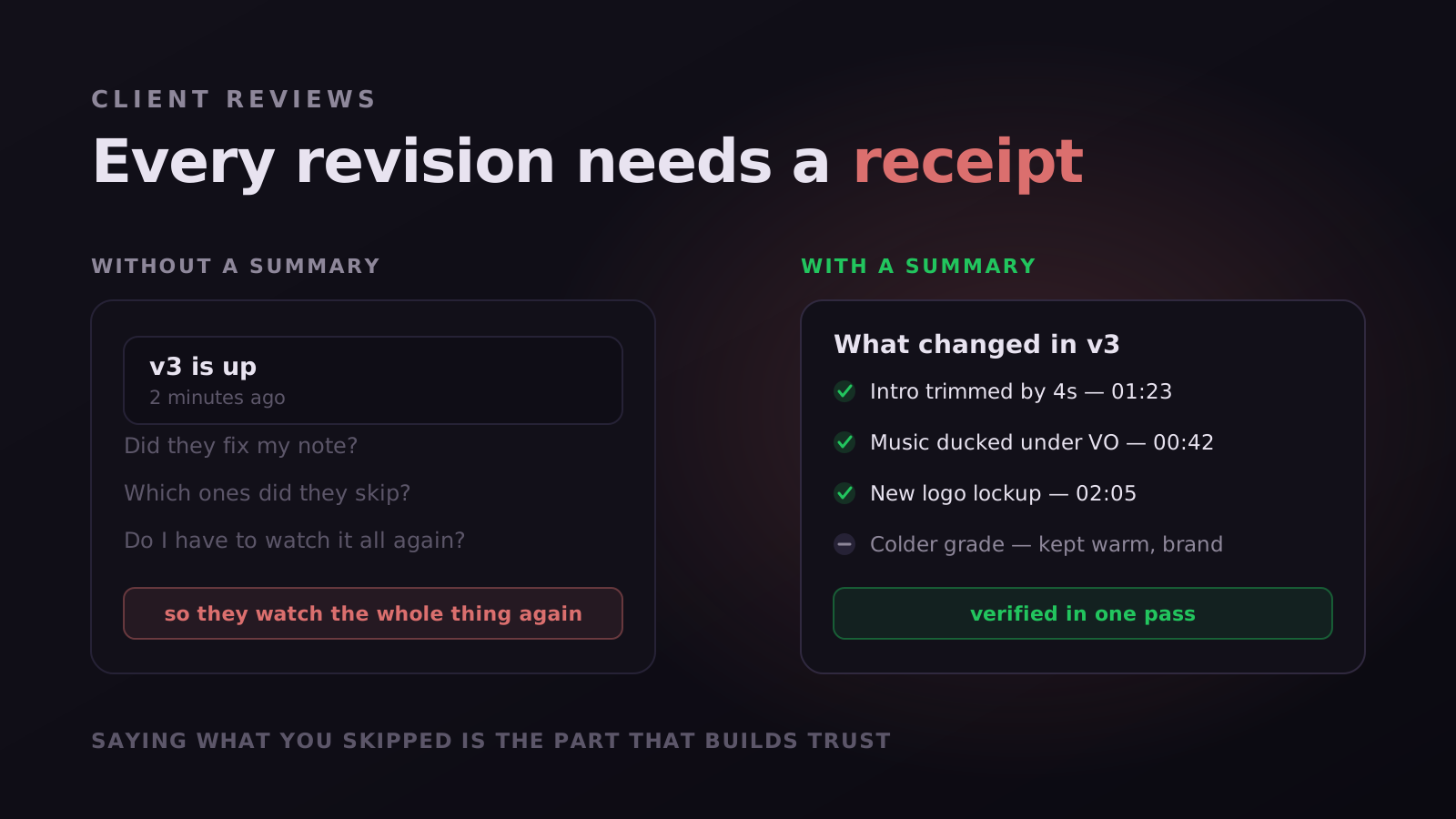
If the reasoning lives on the work, it is a five-minute read instead. The version stack shows what shipped and what preceded it. The notes show what was raised, what was resolved, what was deliberately declined and why. The activity record shows who requested each change and when each revision landed. None of that required anyone to keep a side log, which is the only reason it still exists a month later.
- Release notes on each version explain the changes nobody asked for, which are the ones that look inexplicable later.
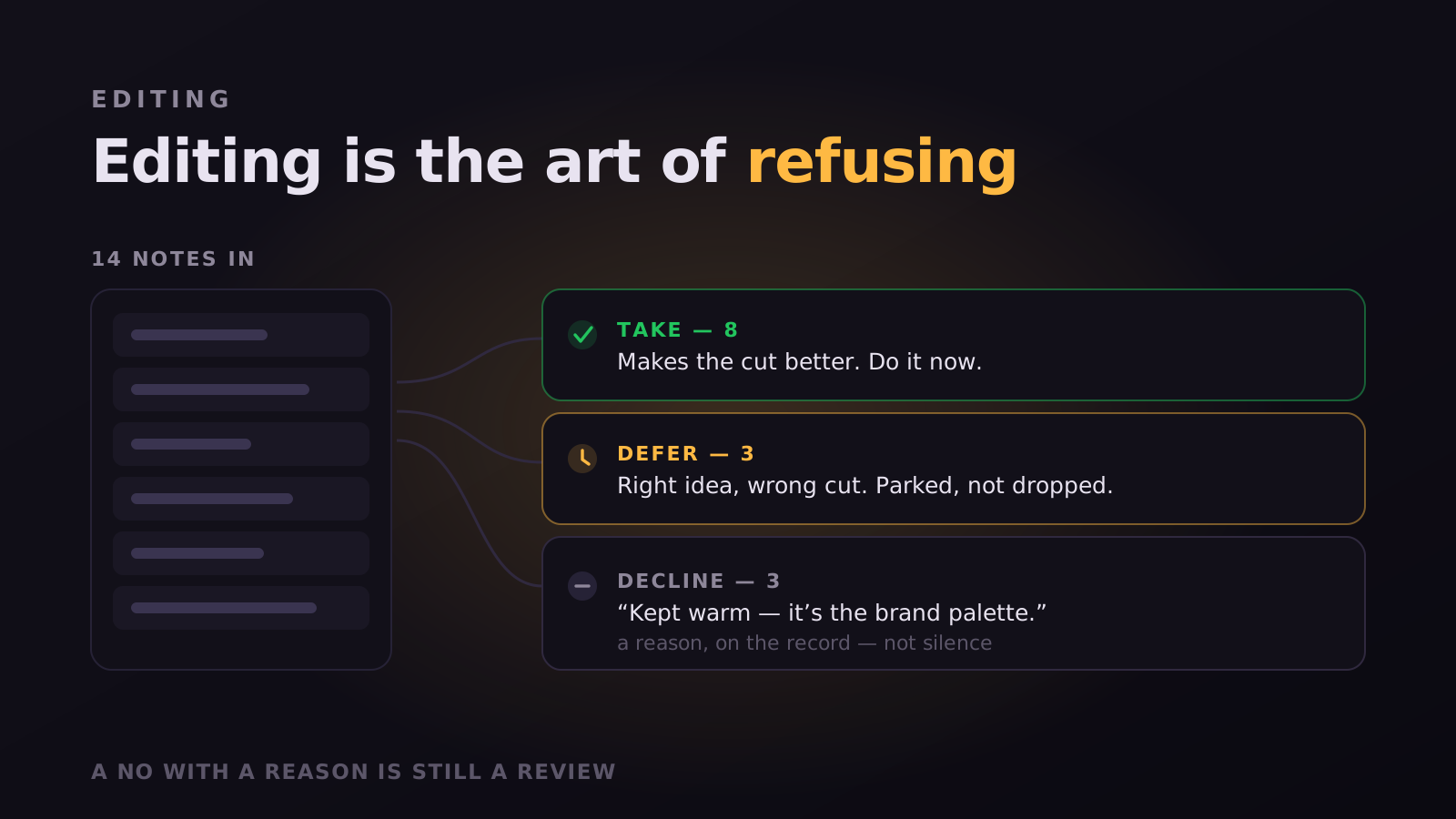
- Won't fix decisions keep their reasoning, so an old rejection does not read as an oversight.
- Approvals are attached to specific versions, so "the client signed off" has a cut attached to it.
- Comments stay pinned to frames, so a note about the third act is still findable without watching the third act.
This is the quiet argument for keeping the whole package in one place rather than only the video. When the thumbnail was approved in a Drive comment and the script in a doc, reconstructing a decision means reconstructing it from three archaeological sites with different conventions. When they are versions of the same project, it is one read.
Stop reading. Start shipping.
Try Magpiie on your next draft. 30-day free trial on Creator Crew, auto-renews and cancel anytime. Bring your team in five minutes.